Acrylic on canvas, 2026
116 × 89 cm
Unique work
Currently travelling for exhibitions — please enquire for availability.
Homo Plumbi — Fragmentation I examines the construction of identity within a cold, materialistic world, where the density of matter becomes both a physical and psychological burden.
The human profile is composed of rigid geometric fragments, suggesting a consciousness divided by accumulated structures, inherited patterns and external systems of control. Its form appears solid, yet unstable: the self emerges here not as something fully autonomous, but as an architecture shaped by what it absorbs from the world around it.
From above, a dense, lead-like substance descends and penetrates the head. This heavy material symbolises the weight of inherited behaviours, family legacies, social expectations and belief systems that enter the mind and settle within it, often without belonging to the individual’s true nature. Lead becomes a metaphor for heaviness, rigidity and spiritual obscuration — the residue of a world dominated by material value, repetition and conditioning.
At the same time, the work opens a reflection on the present and near future. In an age increasingly shaped by artificial intelligence, algorithmic patterns and the mass outsourcing of thought, the mind is no longer influenced only by tradition or culture, but also by systems designed to predict, guide and even think on our behalf. Homo Plumbi raises the question of what happens when human consciousness becomes progressively structured by non-human logic.
The work also points toward a deeper philosophical tension: if a silicon-based mind were ever to cross the threshold into consciousness, what form of awareness would emerge from such a condition? Would it remain an extension of cold material intelligence, or become something capable of interiority, selfhood and presence? In this sense, the painting does not simply address fragmentation, but the uncertain frontier between matter, conditioning and the possibility of consciousness itself.
Through its fragmented composition and restrained monochromatic palette, Homo Plumbi reflects on the struggle between essence and imposition, autonomy and programming, inner being and external influence.
How much of what we think truly belongs to us — and what new forms of consciousness may arise from the systems we create?
Acrylic on canvas, 2026
116 × 89 cm
Unique work
Currently travelling for exhibitions — please enquire for availability.
Homo Plumbi — Fragmentation I examines the construction of identity within a cold, materialistic world, where the density of matter becomes both a physical and psychological burden.
The human profile is composed of rigid geometric fragments, suggesting a consciousness divided by accumulated structures, inherited patterns and external systems of control. Its form appears solid, yet unstable: the self emerges here not as something fully autonomous, but as an architecture shaped by what it absorbs from the world around it.
From above, a dense, lead-like substance descends and penetrates the head. This heavy material symbolises the weight of inherited behaviours, family legacies, social expectations and belief systems that enter the mind and settle within it, often without belonging to the individual’s true nature. Lead becomes a metaphor for heaviness, rigidity and spiritual obscuration — the residue of a world dominated by material value, repetition and conditioning.
At the same time, the work opens a reflection on the present and near future. In an age increasingly shaped by artificial intelligence, algorithmic patterns and the mass outsourcing of thought, the mind is no longer influenced only by tradition or culture, but also by systems designed to predict, guide and even think on our behalf. Homo Plumbi raises the question of what happens when human consciousness becomes progressively structured by non-human logic.
The work also points toward a deeper philosophical tension: if a silicon-based mind were ever to cross the threshold into consciousness, what form of awareness would emerge from such a condition? Would it remain an extension of cold material intelligence, or become something capable of interiority, selfhood and presence? In this sense, the painting does not simply address fragmentation, but the uncertain frontier between matter, conditioning and the possibility of consciousness itself.
Through its fragmented composition and restrained monochromatic palette, Homo Plumbi reflects on the struggle between essence and imposition, autonomy and programming, inner being and external influence.
How much of what we think truly belongs to us — and what new forms of consciousness may arise from the systems we create?

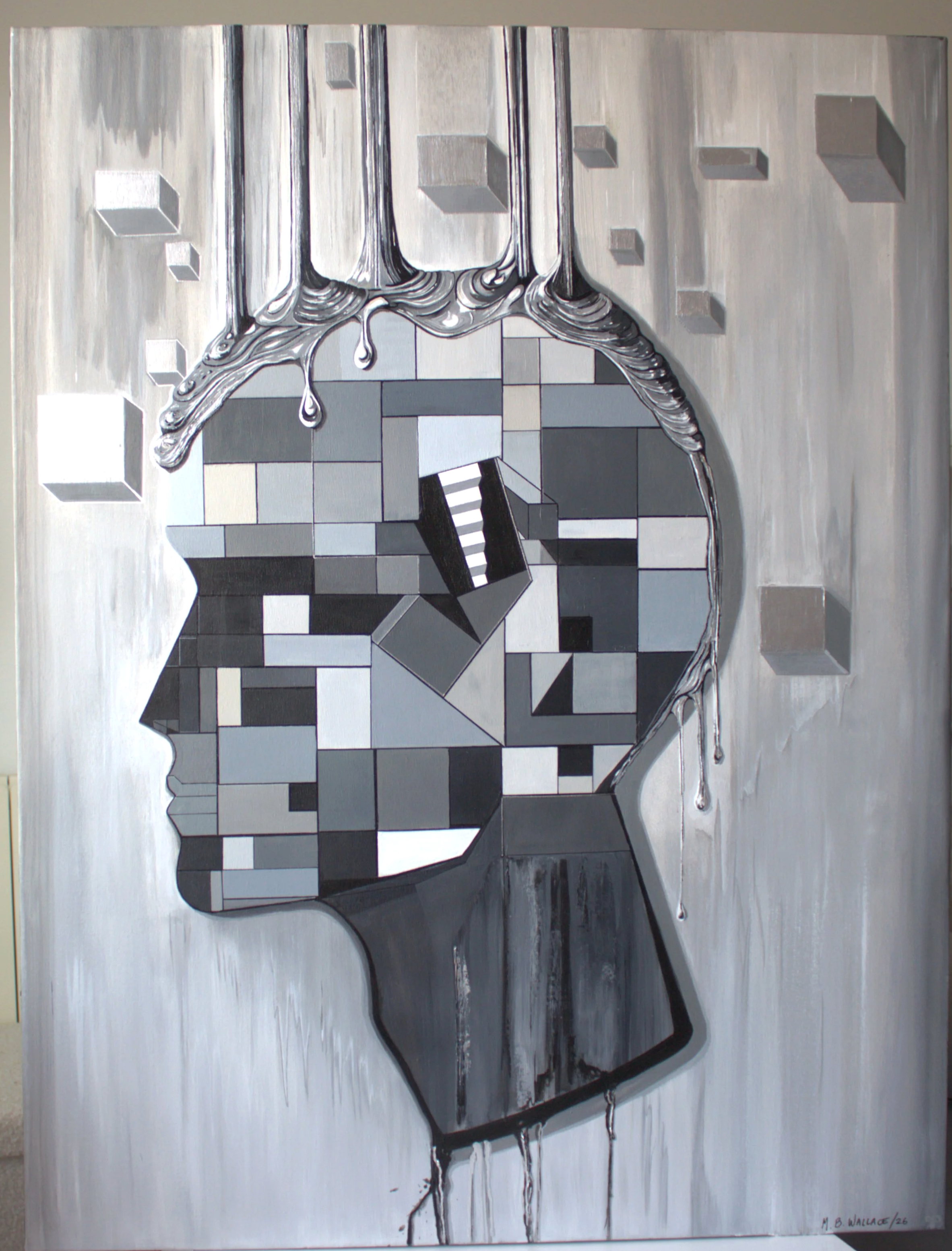 Image 1 of 6
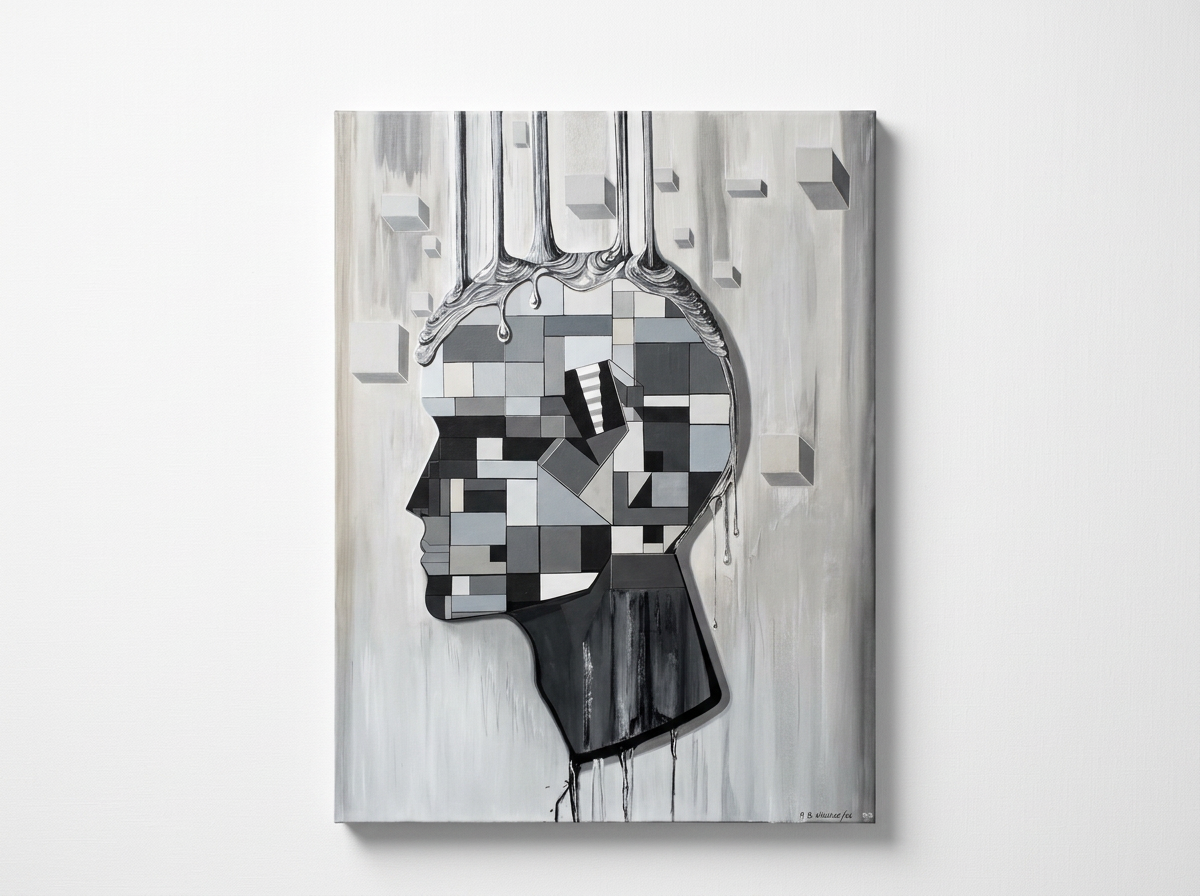 Image 2 of 6
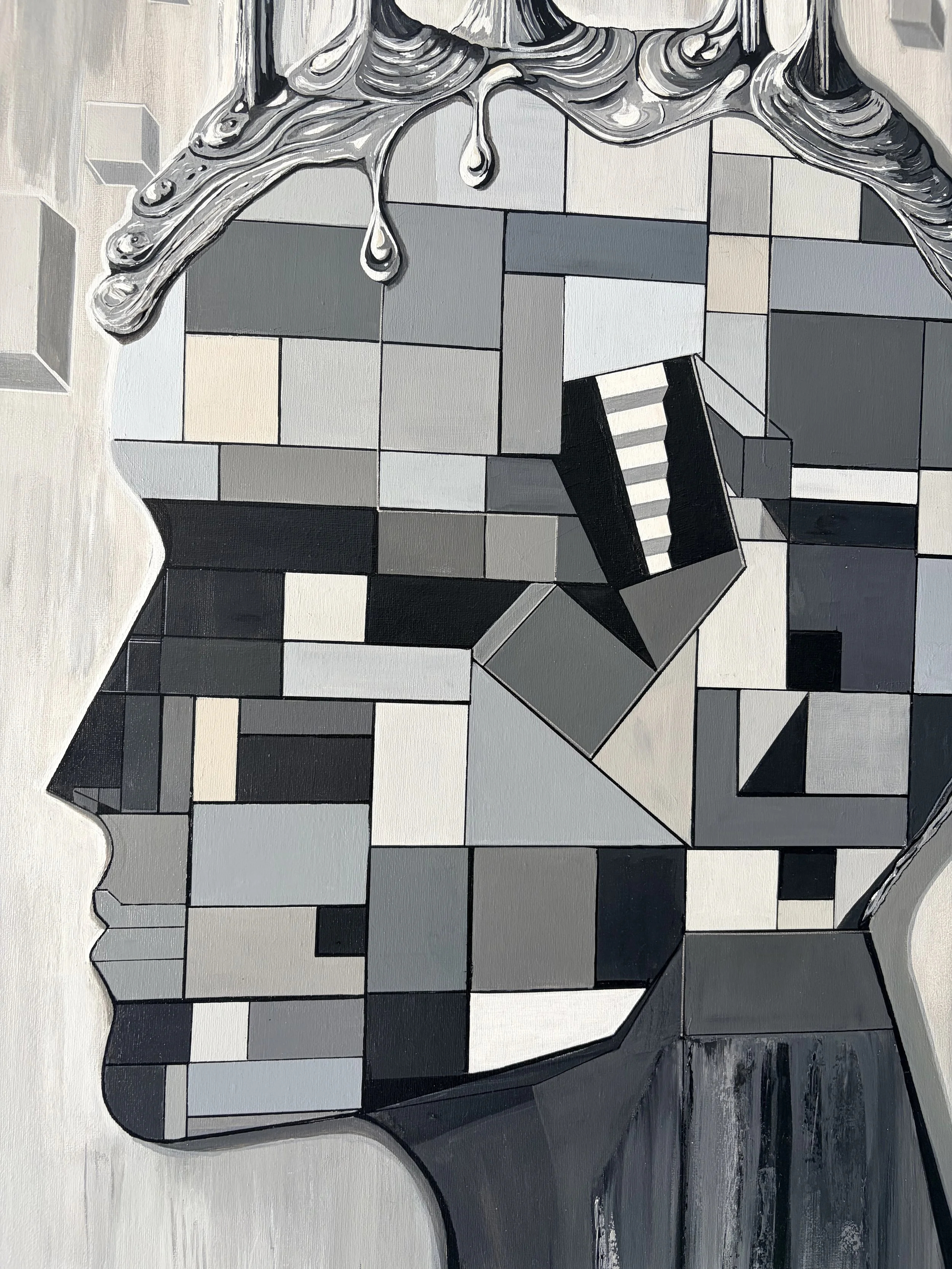 Image 3 of 6
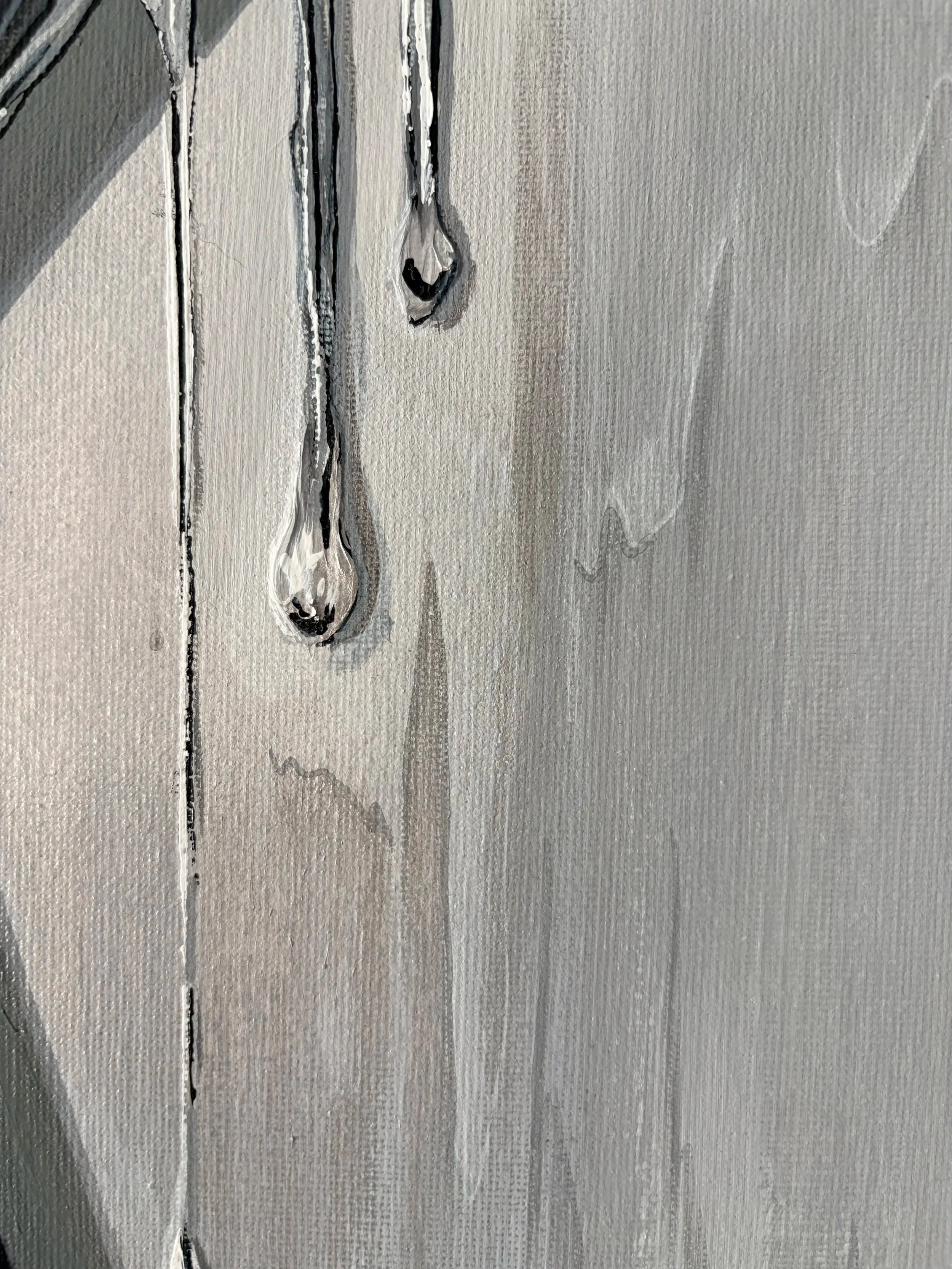 Image 4 of 6
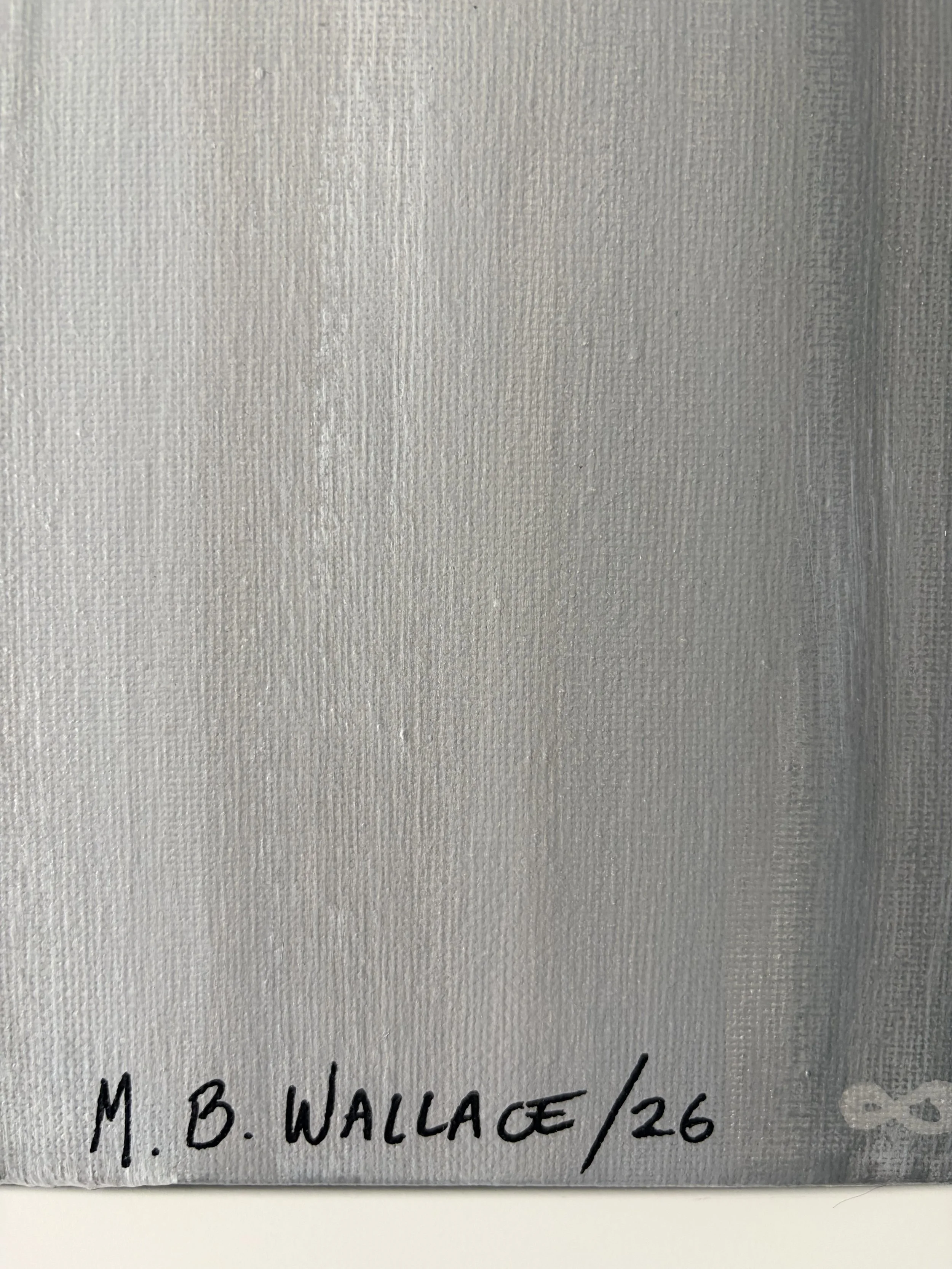 Image 5 of 6
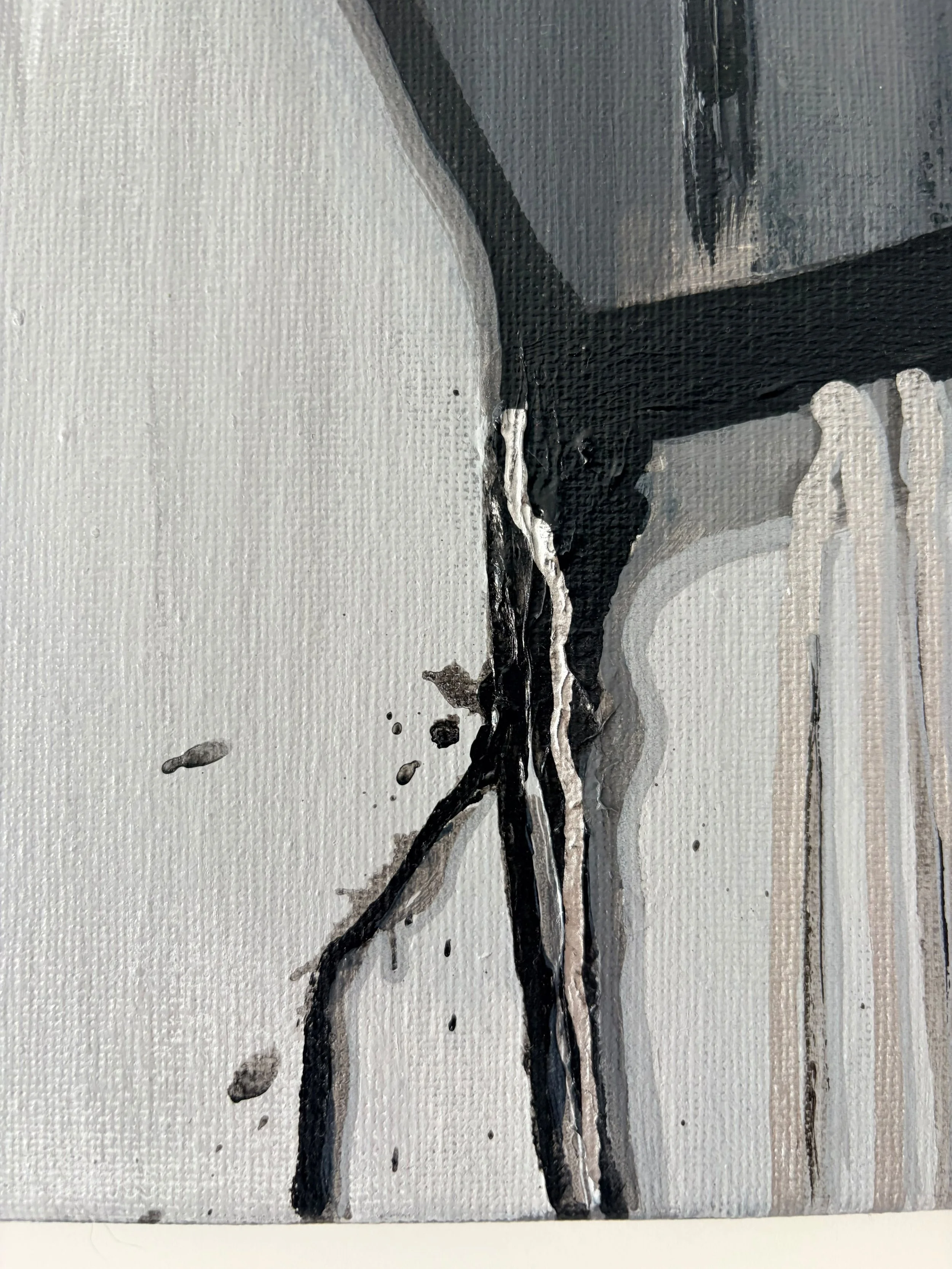 Image 6 of 6